
In the world of research administration, pressure is constant. Between pre-award proposals, post-award reporting, and ensuring compliance, it’s easy to feel like you’re drowning in administrative tasks. If your team is struggling to keep up, the problem isn’t your people, it’s your process.
Many institutions still rely on a patchwork of spreadsheets, emails, and outdated legacy software. This disjointed approach creates critical bottlenecks that slow down the entire research lifecycle. Let’s break down the five most common chokepoints and how a modern approach can solve them.
1. The Proposal Scramble
The deadline for a major federal grant is approaching. The PI is finalizing the science, but you’re stuck chasing down bio sketches, checking budget calculations on a spreadsheet, and manually routing approvals via email. Sounds familiar? This last-minute chaos increases the risk of errors and missed deadlines.
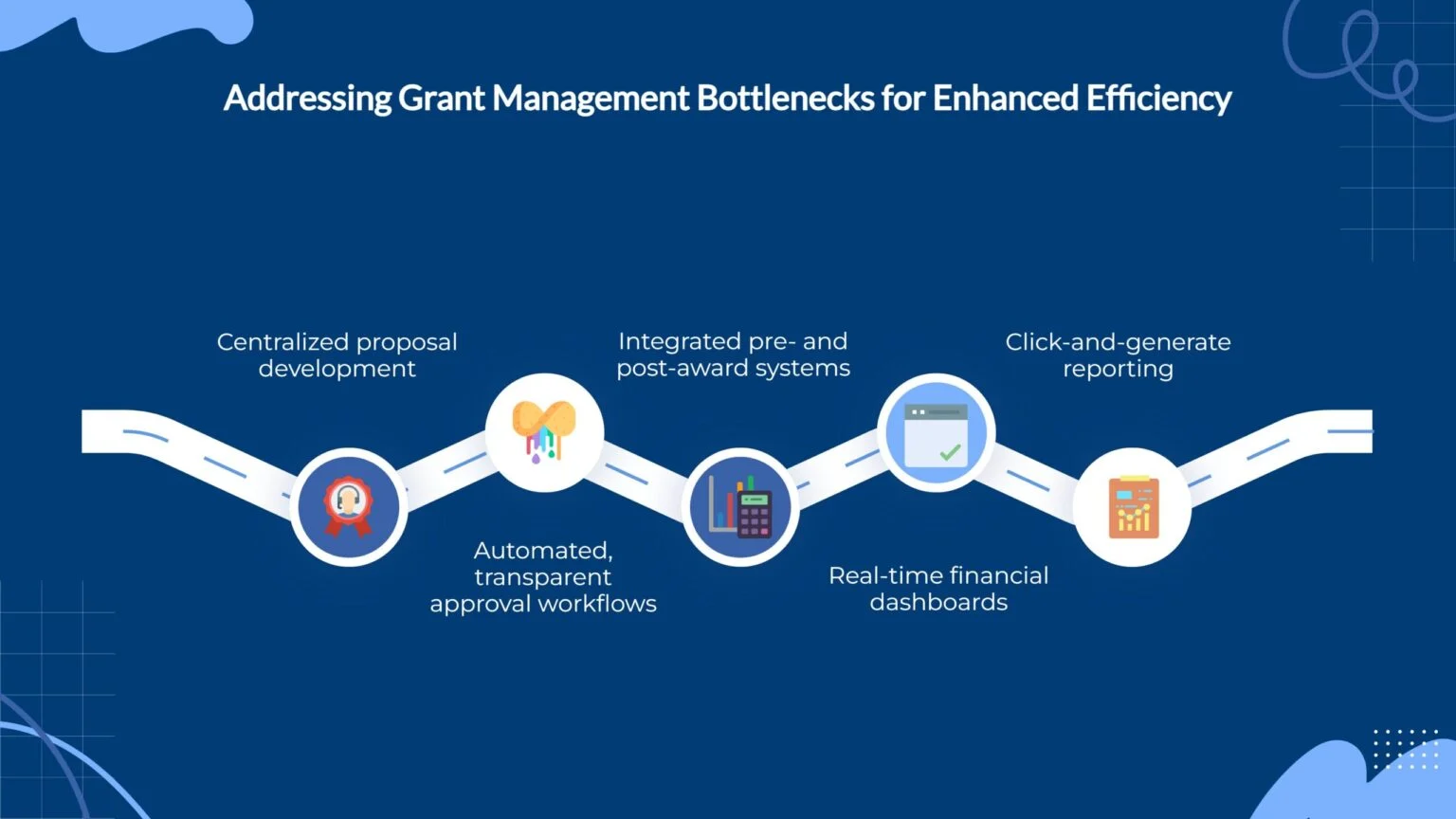
- The Fix: Centralize the process. A modern, cloud-based platform provides a single source of truth. PIs, co-investigators, and administrators can collaborate in real-time on budgets and narratives. Automated validation checks can flag errors instantly, long before the submission deadline.
2. The “Black Hole” of Approvals
Once a proposal is complete, it enters the approval void. It gets emailed from one desk to another, with no clear visibility into who has it or where the delays are. Tracking down the status requires a dozen follow-up emails, wasting valuable time.
- The Fix: Implement transparent, automated workflows. Imagine a system where you can see the exact status of every proposal in a visual dashboard. The platform automatically notifies the next person in the chain, tracks their approval, and creates a complete audit trail. This eliminates the guesswork and keeps the process moving.
3. The Post-Award Data Entry Nightmare
Congratulations, the grant is funded! Now comes the tedious task of manually re-entering all the award data, budgets, compliance requirements, reporting dates, into a separate financial system. This redundant work is not only time-consuming but also a major source of data entry errors.
- The Fix: Integrate your systems. A truly connected research administration platform integrates pre-award and post-award modules. When an award is made, the proposal data automatically flows into the post-award system, creating the project, setting up the budget, and populating compliance trackers without manual intervention.
4. The Spreadsheet Labyrinth for Financial Tracking
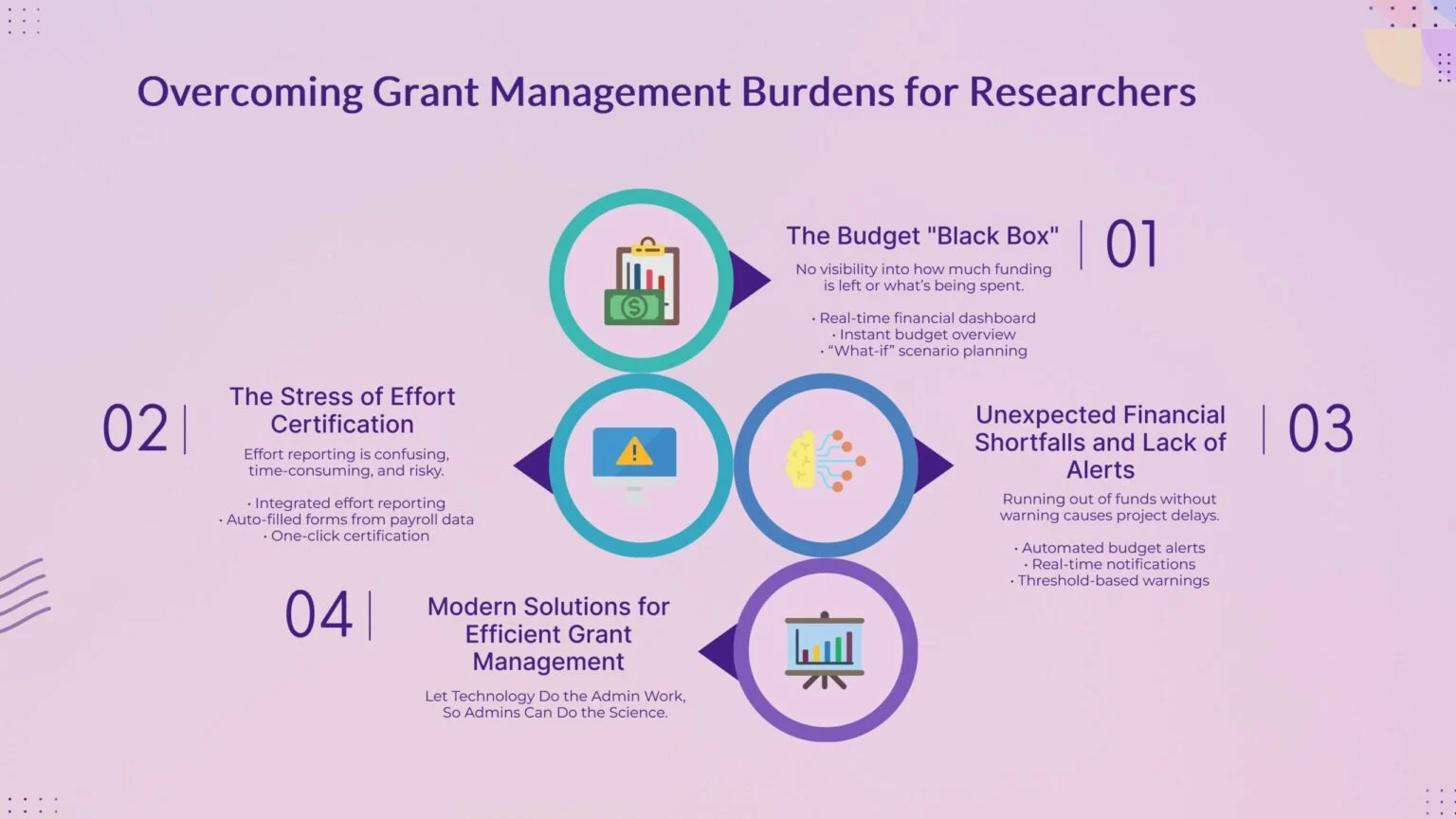
Managing grant budgets across multiple spreadsheets is a recipe for disaster. Tracking expenditures, calculating burn rates, and projecting balances is a manual, error-prone process that provides zero real-time visibility for the PI.
- The Fix: Use a dedicated financial management module. Modern grant management tools offer intuitive dashboards where both administrators and PIs can see budget-to-actuals in real time. The system can automate projections and send alerts when a spending category is nearing its limit, preventing overspending before it happens.
5. The Agony of Reporting Season
When it’s time for annual progress reports or final closeouts, the scramble begins again. You have to manually pull data from a half-dozen different sources, reconcile conflicting numbers, and compile it all into the funder’s required format.
- The Fix: Automate reporting with a click. When all your grant data lives in one integrated system, generating reports becomes effortless. With a platform like Fibi, you can produce accurate, up-to-the-minute financial and progress reports in pre-built templates that meet federal requirements, turning a week-long ordeal into a ten-minute task.
Your institution’s research potential shouldn’t be limited by outdated processes. By eliminating these bottlenecks, you empower your administrators to focus on high-value strategic work instead of low-value data entry.