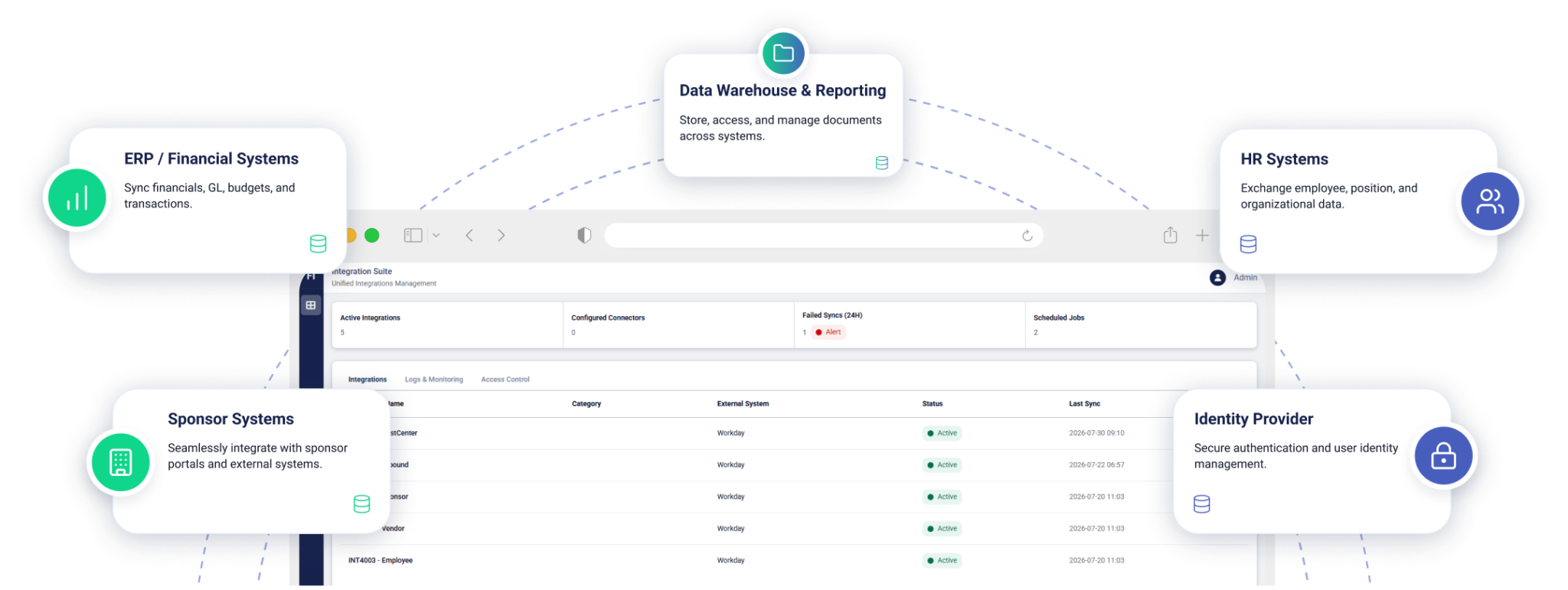
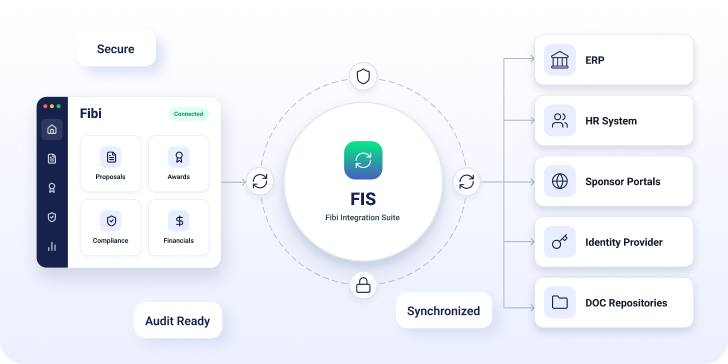

Research administration doesn’t run in isolation. Proposals, awards, compliance records, and financial data all need to move cleanly between Fibi and the other systems your institution depends on your ERP, HR system, Sponsor portals, Identity provider, Data warehouse and reporting. The Fibi Integration Suite (FIS) is the dedicated layer that connects Fibi to your broader institutional ecosystem, keeping data synchronized, secure, and audit-ready across every connection.
Fibi’s Form Builder provides a configurable framework for designing forms, configurable workflows, managing approvals, and maintaining complete visibility throughout the research lifecycle. The same platform capability supports every Fibi module, enabling institutions to standardize business processes while preserving the flexibility required across different research administration functions.
FIS handles all data exchange across connected systems, so integration logic lives in one place, not scattered across point-to-point scripts.
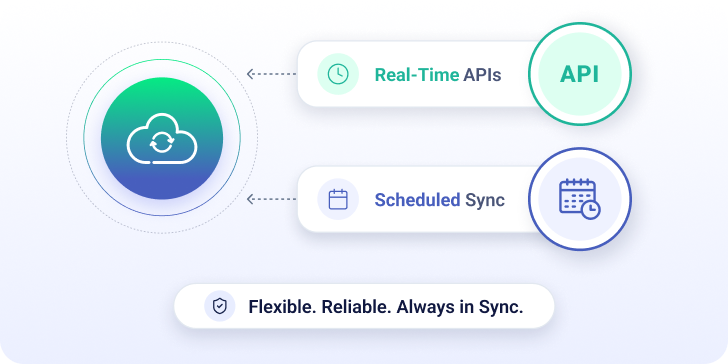
Supports both real-time APIs and scheduled data synchronization for flexible data exchange.
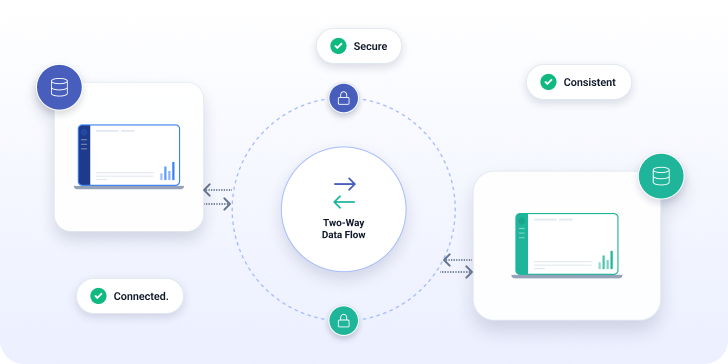
Secure, two-way connectivity with external systems ensures data stays consistent across platforms.
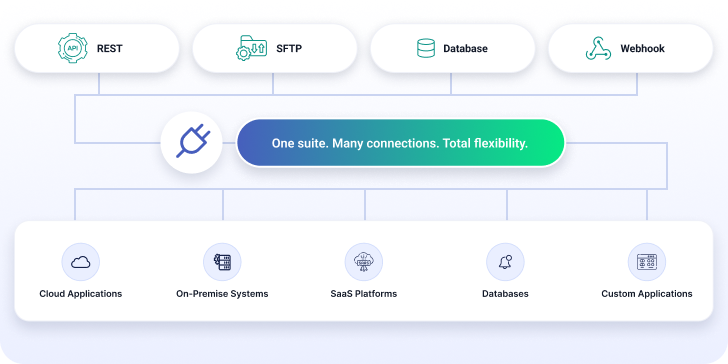
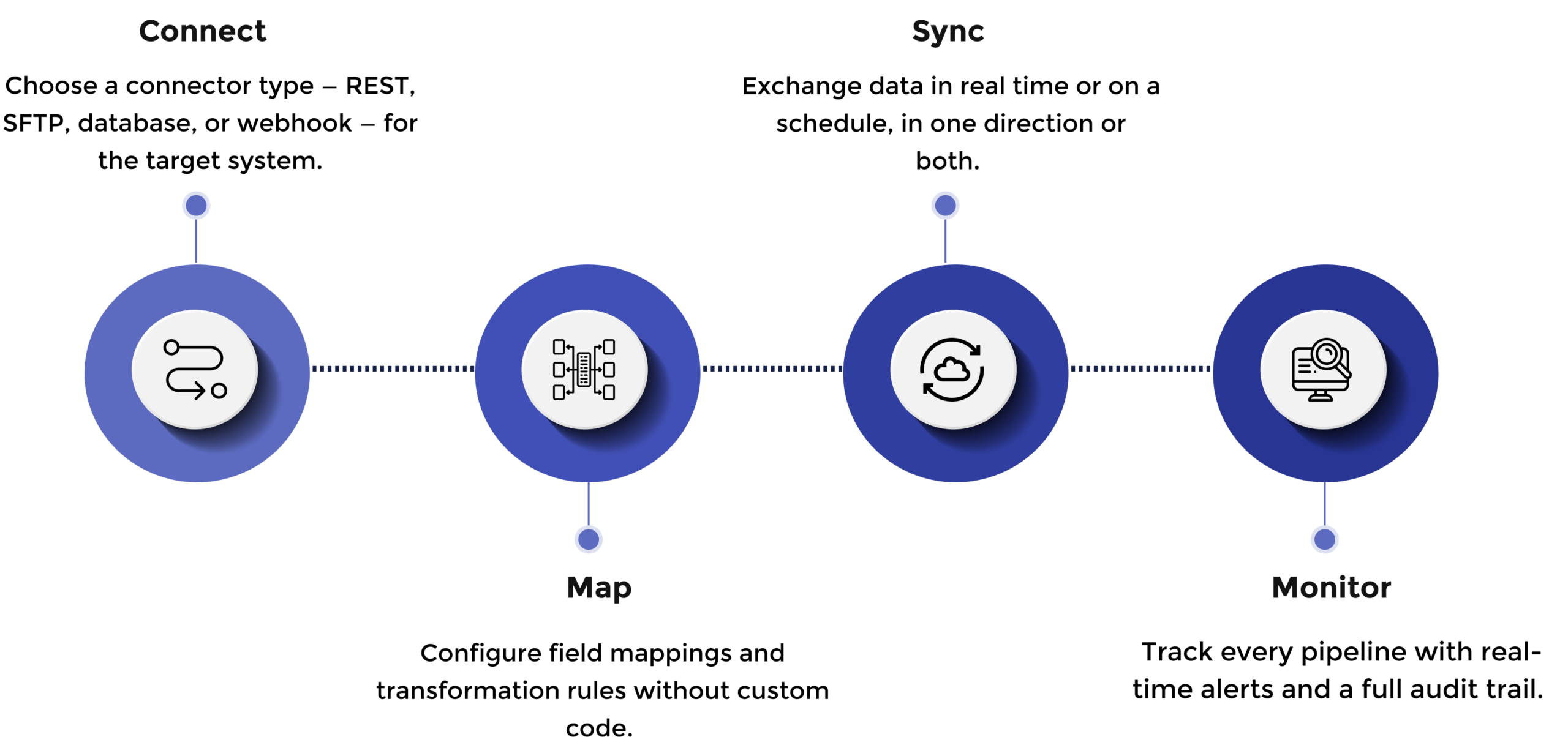
REST, SFTP, database, and webhook connectors support broad system compatibility.
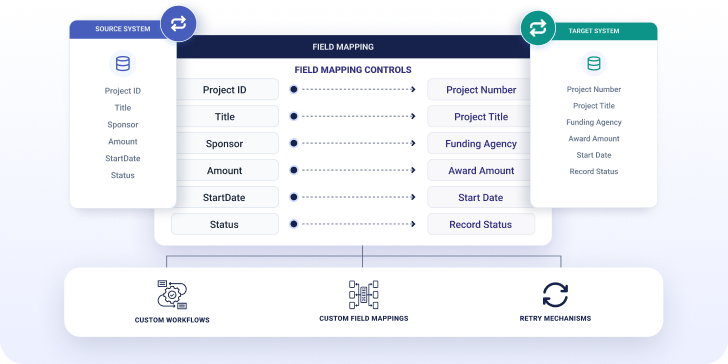
Custom field mappings, workflows, and retry mechanisms tailored to your environment.
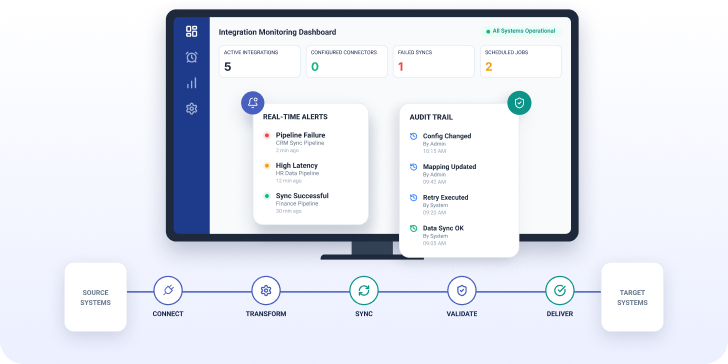
Real-time alerts, audit tracking, and monitoring across all integration pipelines.
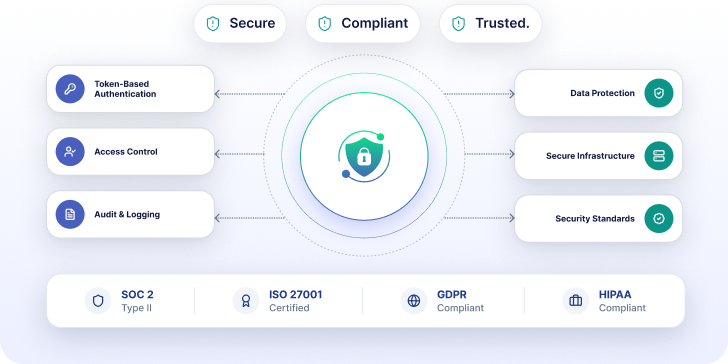
Token-based authentication, access control, and enterprise-grade security standards.
Exchange data with modern web services and cloud platforms using standard REST APIs.
Move batch files securely with institutional systems that rely on file-based exchange.
Read from or write to institutional databases directly where a system has no API layer.
React to events in real time as they happen in connected systems, without polling.
Extend FIS with purpose-built connectors for systems with non-standard interfaces.
Push and pull data as changes happen, for use cases where currency matters (e.g., award status, personnel changes).
Run batch syncs on a defined schedule for high-volume or lower-urgency data.
Keep Fibi and connected systems consistent in both directions, not just one-way exports.
Automatically retry failed transfers and flag conflicts that need manual review.
Convert and normalize data formats between Fibi and external systems during transfer.
Sync award, budget, and expense data with institutional ERP/financial platforms (e.g., Banner, PeopleSoft, Workday).
Keep personnel, role, and appointment data current by connecting to HR/HRIS and identity providers.
Support institutional authentication standards such as SAML and Shibboleth for seamless, secure login.
Connect to document management, e-signature, and institutional repository platforms to keep records and files in sync.
Map fields between Fibi and connected systems without custom code.
Trigger integrations based on workflow events and status changes inside Fibi.
Configure connections independently for test, staging, and production environments.
Centrally view, enable, disable, and troubleshoot all active integrations.
Update field mappings as connected systems change their schemas, without breaking existing integrations.
Secure every connection with token-based authentication rather than shared credentials.
Restrict which users and systems can configure or view integration settings.
Track every integration pipeline in real time, from trigger to completion.
Notify administrators immediately when a sync fails or a connection drops.
Log every data exchange for compliance review and troubleshooting.
FIS is Fibi’s dedicated integration layer for connecting to the other systems your institution runs ERP, HR, SSO, sponsor, and document systems so data stays synchronized without custom point-to-point integrations.
FIS supports connections to ERP and financial systems, HR/HRIS platforms, identity providers (SSO/SAML/Shibboleth), sponsor and federal systems (such as Grants.gov and eRA Commons), and document or e-signature platforms — using REST, SFTP, database, or webhook connectors.
Both. FIS supports real-time API-based synchronization for time-sensitive data and scheduled batch synchronization for high-volume or lower-urgency exchanges — configurable per connection.
FIS uses token-based authentication, role-based access control, and enterprise-grade security standards for every connection, with a full audit trail of all data exchanged.
Yes. FIS includes a connector framework for institutions with systems that require a non-standard integration, in addition to its standard REST, SFTP, database, and webhook connectors.
FIS includes automatic retry handling for failed transfers and real-time alerts to administrators, so failures are caught and resolved quickly rather than discovered later.
Timelines vary by system complexity and connector type. Standard connectors (REST, SFTP) can often be configured in a matter of weeks; custom connectors for non-standard systems may take longer. Our team scopes this during onboarding.
Both. The connector management console gives your team real-time visibility and control, while Fibi support is available for troubleshooting and configuration changes.
Whether you’re scoping an integration, evaluating technical fit, or ready to talk implementation, our team can walk you through how FIS connects to your existing systems.